
Introduction
Grammar is the backbone of any language, providing the rules and structure needed for
effective communication. For young learners, building a strong grammar foundation is
essential for their academic growth and language development. This blog discusses strategies
to help children aged 5 to 14 develop robust grammar skills.
The Importance of Early Grammar Education
Language Proficiency: Early grammar education helps children understand the rules
of language, improving their overall proficiency.
Enhanced Writing Skills: Good grammar is crucial for writing clearly and
effectively.
Better Reading Comprehension: Understanding grammar aids in comprehension, as
children can better understand the structure and meaning of sentences.
Strategies for Teaching Grammar
Interactive Activities: Use games and activities to make grammar fun and engaging.
Examples include grammar bingo, sentence building games, and online grammar
quizzes.
Storytelling and Writing: Encourage children to write their own stories or journals,
focusing on using correct grammar.
Visual Aids: Charts, posters, and flashcards can help children remember grammar
rules and concepts.
Daily Practice: Incorporate short, daily grammar exercises into the routine to
reinforce learning.
Age-Appropriate Grammar Lessons
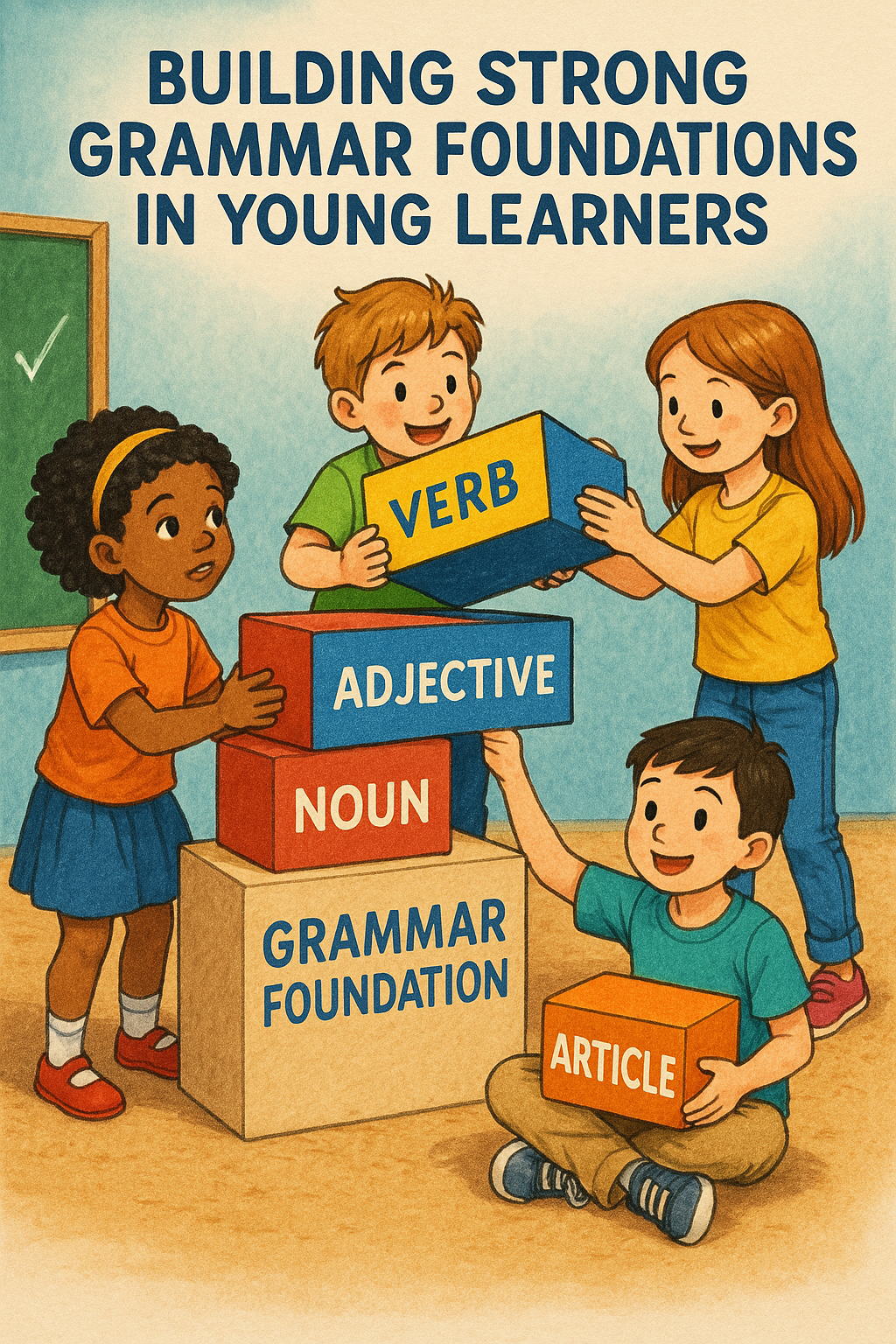
Ages 5-7: Focus on basic sentence structure, punctuation, and common grammar
terms like nouns, verbs, and adjectives.
Ages 8-10: Introduce more complex concepts such as subject-verb agreement,
different tenses, and parts of speech.
Ages 11-14: Dive into advanced grammar topics, including clauses, conjunctions, and
sentence types.
Conclusion
Building a strong grammar foundation from a young age sets children up for success in both
academic and personal communication. Through interactive and engaging methods, educators
and parents can help young learners develop the grammar skills they need to excel.